Showing posts with label tasting. Show all posts

Monday, January 20, 2014

Let's taste some wine...


... to make up for my Wine 101 class, cancelled due to low (practically no) enrollment. Too bad, for I had it planned out rather well, I flatter myself. I offered three programs, to be held three Friday evenings in a row in October, November, and December. The first two Friday sessions of each month's program would have been the same. Session 1, "From the farm and the lab" would have explored wine as a farm product and as something that is all about chemistry too; session 2, "Come to the table -- and the fridge" would have delved into flavor profiles, storing and serving, and food pairings; and the third session of each of the three monthly programs would have ventured off to a different major wine region(s) of the world. France and Germany, Italy and Spain, California and Argentina were my first choices. My idea was that everyone could pick the month he wanted to do Wine 101, based mostly on which regions, at the end, most interested him.

Alas and alack. Still, think of all the free evenings I have now. Let's taste some wine(s).

2008 Miner Napa Valley chardonnay, Oakville CA

pure honey -- caramel -- banana 
apple compote
syrupy -- a harsh acidic burnt-ness at end 
popcorn again -- burnt
thick golden color 
Day 2 -- sweet -- moscato like

A common theme for my chardonnay-memory: burnt popcorn. Retail, about $22.

2008 Terra Andina Altos malbec-petit verdot, Sur Andino S.A., Valle Central, Chile

bright, light candy-cranberry color
smoke 
(faint) paint -- cinnamon -- tea
equal parts acidity + tannin
barbecue -- light fruit -- cherry 
smoked cherries

A common theme for my experience of malbec: cherry. Inexpensive malbecs remind me of gooey cherry pies, like the Hostess kind that used to be sold individually in wax bags. Pricier malbecs = smokier cherries. Retail, about $14.

2007 Bogle Phantom (petite sirah, zinfandel, mourvedre)

pepper (scent) 
cinnamon -- cedar 
clove -- prune -- barbecue smoke 
deep mulberry purple 
cinnamon and prune compote 
fruit bomb -- good

A common theme of the red blends I like (see Apothic red): they are heavy on the zinfandel or petite sirah or both, therefore heavy on the lush, cinnamon-and-baked fruit, and sometimes chocolate, flavors I also like. If you try this one just after having sipped something much more acidic, like the malbec blend above, the Phantom's thick, sugary texture will startle (and educate) you. But dear me, will a liking for it nonetheless always be a sign of the non-sophisticate? Ought one to admire something leaner, racier, more elegant and subtle? Retail, about $17.

2008 Ca'Momi Bianco di California

soapy -- a bit bird poopy -- 
thick-bodied -- doughy 
a bit caramel-y -- metallic -- acidic
A southern French type blend? (viognier, marsanne, etc.)?
bubble gum, flowers
overall, sweet, honeyed, punch-like

The theme here: watch me get this one wrong. Thus far in my wine drinking experience I find that there are only two wines I don't care for. Among reds, I find the carmenere (grape) harsh and off-putting. Among whites, I don't much like the blends of France's Rhone valley. The grapes in question here are, except for the increasingly familiar viognier, little known varieties with pretty names like grenache blanc, marsanne, and bourboulenc. If you look them up in wine books you will find all these grapes described as producing "full bodied" wines. Indeed they seem to do so. To my taste, that full body makes for a mouthfeel of thick, raw doughiness or even greasiness which, combined with a promising sweet floral aroma and a finishing dry acidity, adds up to a discordant disappointment in the glass.

Viz., Ca'Momi. A white blend, and I thought I was on to something. There was the doughiness, the thick body, the sweetness and a bit of the odd, discordant funk I call "bird poop-y." (We used to own parakeets, and the smell of an unwashed cage is something you never quite forget. Neither as sharp or offensive as the straight-up evacuative odors coming from cats or dogs, it is nevertheless uniquely musty and vegetal and organic and just sort of -- old. Reptilian, almost?) All in all, might this be "a southern French type blend?"

"NOPE," as I added to my notes after doing some fact-checking. Ca'Momi's Bianco di California blend is actually chardonnay, sauvignon blanc, and gewurztraminer. What a combination -- though it would explain every flavor component, from thick body and caramel (chardonnay, I think) to acid (sauvignon blanc) to bubble gum and flowers (gewurztraminer). Retail, about $10.

1998 Bodegas Montecillo Gran Riserva Rioja, Sociedad Anonima

Tawny maroon color 
leaves -- brine -- smoke -- prunes 
very briny -- light, acidic -- 
very refined -- not much fruit
brine = a sort of soured vanilla? (vanilla typical of American-oak aged Riojas, Wine for Dummies) 

A final theme: some firsts. This was my first gran reserva Rioja (as opposed to either a crianza or a reserva, both Riojas made mostly from the same grape of course -- tempranillo -- but aged less before release). And yes, far from being the brawny, "massive" thing you might expect a Spanish red to be, it was, as Karen MacNeil in The Wine Bible notes of Riojas, surprisingly light and delicate, "almost fragile." Also, this is the first time I can recall having tasted a European wine whose maker merits a mention in another expert source. Bodegas Montecillo is a "consistent producer," according to Wine for Dummies. Expert sources are always chock full of firm and confident European wine recommendations that you and I have a hard time finding on local store shelves, because the wines in question are so good that they tend to jump ship in Manhattan or San Francisco and stay there, not bothering with the long journey to the interior where Franzia -- bless its heart -- is king. A cynical rule of thumb in the heartland is, if your local retailer can afford to offer it to you, even in a big suburban super store, chances are it's a fine but still yeoman product. Not so, it seems, with this wine from the cellars of Sociedad Anonima (the anonymous society? how mysterious). Retail, about $24.

One more, just for pleasure? Oh, why not. I have a niece who has just given birth to a little boy, within the hour. (She put it on Facebook. Young people nowadays.) A toast, then, to baby Austin -- why do I envision a car? -- health and long life.

2009 Terra Andina Reserva pinot noir, Sur Andino, Chile

currant jelly color -- beautiful
cherry + raspberry nose -- 
a little gaminess -- 
very gentle -- acidic but fruity -- 
very fine -- take care to keep it cool, otherwise very spiky

Retail, about $14.

Reading Mark Oldman's Brave New World of Wine

From October of 2010. I suppose he has long since published his next book by now.


Here's a delicate subject. The kind people at W. W. Norton asked me if I would like a copy of Mark Oldman's new book, Oldman's Brave New World of Wine. After contemplating the offer for about a second I replied, Yes, I'd be delighted to have a look at it.

I read it in an afternoon. Mr. Oldman, television host, educator, and wine writer for Everyday with Rachael Ray, is good; he lays out brief descriptions of over forty wines presented as unusual and economical alternatives to the same old things many of us safely buy and drink, or to the very grand things that, chances are, we'll never buy and drink. Each chapter is followed by a chart summarizing most of that chapter's information, grouped under short headlines like "Bravely Said" (a pronunciation guide), "Label Logic" (answering the grape-or-place question), or his trademark "Poosh it!" (being a small, interesting  detail on the wine). Each chapter ends, and the major sections of the book begin, with a unique invention, namely scatterplots tracking where various dots representing particular wines fall on an X axis showing price, and a Y axis showing adventurousness. 

I learned from him, in short easy doses. Moschofilero (mos-ko-FEE-la-roh), a Greek white that is not retsina, and Txakoli (choc-OH-lee), a Spanish white that is not albarino, were both new to me. And there were more. But naturally much of what Mr. Oldman considers "brave new pours" are a matter of personal preference and the luck of experience. Depending on where the reader is in his explorations of wine, the book may seem indeed deliciously adventurous or way too advanced or just random. For example, I happen to know Mavrodaphne, a sweet Greek red which he does not approach because he thinks it too obscure for anyone to find on a grocery store shelf (we carry it). And I am surprised to see him devote a chapter to New Zealand sauvignon blanc, as an "Audacious Alternative" to sauvignon blanc and pinot grigio. This is a wine which I should think even newer drinkers know. The same reaction applies, of course, to those unique and inventive scatterplots. Why is an Australian riesling necessarily low in adventurousness while a madeira is high? It all depends.

These are minor quibbles. What most impresses me about the book is the way it is so carefully and painstakingly arranged as a tour de force of wine-publishing marketing. Brave New World was assembled for a purpose, and I have the distinct sense that Mark Oldman, while certainly the face of the little world that assembled it, the chief ambassador you might say, is not remotely the entire diplomatic party. When a book credits a Production Manager (Devon Zahn, here) in the fine print on the back of the title page, you may be sure you are holding in your hand the fruit of more than one man's mind.

I salute them. Wine publishing is tricky. There is a big audience out there comprised of "wine newbies" -- I absolutely consider myself one -- who want good-looking, cheerful books that give them correct, "insider" information on this complex topic. More importantly, this audience also wants its bedside reads to reassure them that wine is not complex. A paradox, no? No matter. We like to know that experts disagree with one another on the way wines taste and should taste, and on what foods go with them. We appreciate a reassuring story about an expert sloshing ice into her glass, albeit only for the four seconds needed to dilute some of the alcohol (see Chapter 26, on Lettie Teague doing this to her Cotes du Rhone "at New York's acclaimed Eleven Madison Park"). My old paperback friends The Wine Avenger (by Willie Gluckstern) and Fear of Wine (Leslie Brenner) gave me that same reassurance and encouragement, in the same flip style, when I first began borrowing wine books from my local library.

But Willie and Leslie muscled their way into print back in the '90s, which is tantamount in publishing to the late Cretaceous I suppose. They may have had reason to thank some people in their acknowledgments, as opposed to Mr. Oldman who generously thanks a small army, but on the whole their books still seemed the result of one writer sitting down with his ideas, a word processor, and perhaps a great, clunky cordless phone. Brave New World, with all its bells and whistles, is different, very much a la mode. It makes me wish I had been a potted plant in the room -- so much nicer than being a fly on the wall -- during the brainstorming sessions when it was all planned, when ideas were offered, decisions taken, projects allotted to people in cubicles at Norton, Hollywood publicists contacted, and balls got rolling. I don't doubt that the original rough sketch may have been Mr. Oldman's, but beyond that surely it had to have been quite the team effort. Only a committee could think of dividing food pairing recommendations into the two tiny little, at-a-glance categories "Loveable Feast" (general good matches) and "Locally Lusty" (what Greeks eat with moschofilero). The hundreds of celebrity quotes alone cannot have been items the author himself solicited, collected, filed, and then retyped in pleasing order in lengthy blocks throughout his manuscript. (We're glad to know Jodie Foster likes Chateau Petrus when she visits her sister in France.) And we have not even reminded ourselves of the summarizing charts, the scatterplots, the page-devouring appendices at the end laying out most of what was said before. All of it must have demanded -- what is the a la mode, cubicle word? -- major facilitating. 

Of course I could be wrong. Mr. Oldman himself may have done it all, and really lived through every story, including the one about racing to a restaurant through gangland Sao Paulo in the car with the bulletproof glass. At any rate surely he is responsible for Brave New World's prose.

That, regrettably, is a problem. There's not much of it -- perhaps half or even just one third of the book is actual writing. Facilitators seem to have kept him firmly to four or five paragraphs per wine. Reading everything through for the first time, I concluded he missed his true calling, which was to have been a gag writer for the Tonight Show, preferably in Johnny Carson's mid-'70s heyday. Enjoy him, or try, on the difference between chardonnay aged in oak and that not aged in oak: "Vintners hijack the pink Cadillac that drives so many warm-climate chardonnays and switch out its sheepskin seats for the spare elegance of cold leather." On txakoli: "... all in all, a spritzy, pleasantly sour rush that will revive you faster than Eskimo-kissing a round of smelling salts." On merlot which is too jammy and aged in oak too long: "Expensive merlot can be the opposite: overripe, sun-baked fruit plagued by more wood than a foreclosed Miami condo."

And this goes on and on, almost every sentence it seems another wisecrack, all of them adding up to a production (memo to Mr. Zahn) about as leaden as the Tonight Show has been for fifty years. Any good writer will recognize a pattern like this and put a stop to it. Or his editors will. If you haven't got an editor, you've still got Samuel Johnson, whose 18th-century advice remains priceless: "Read over your compositions, and when you meet a passage which you think is particularly fine, strike it out."

There is much Mr. Oldman should have struck out. But stop. Even if you do lose patience, give him a second chance. Go back and read him again. He is rich in wine knowledge, and when he unbends and stops being too cute for words, when he stops being a personality and an ambassador for an excellent marketing project, which I hasten to say is not a bad thing to be, he can write plain English and pass on to adults some of the richness he has mastered. It's no coincidence that he rises to it when he faces either the Everests of the wine world -- Burgundy, chapter 18, Bordeaux, chapter 23 -- or something truly obscure, like the strange Napa winery called Scholium Project ("a cult favorite among in-the-know sommeliers"). He calms down then, and tells us useful things. Even his paragraphs get longer.

It's also these few passages that have a bit of, if not quite the eternal in them, then shall we say at least a little age-worthiness. For the rest of it, Brave New World can only be a book you'll dip into a half dozen times, looking up temporary novelties. You will soon exhaust its whirligig treasures, and for knowledge's sake will probably want to invest instead in a good, inexpensive paperback encyclopedia like Ron and Sharon Herbst's New Wine Lover's Companion.

Nevertheless I look forward to Mr. Oldman's next book (not only because I'd hate to be denied access to any future delicate subjects but also) because I think he can do far better. The wine publishing world is obviously athirst for material, and with these 283 pages plus appendices, a good team has produced a topical triumph. Bravi. Incidentally all readers seem to adore it, as they uniformly adored his first book. The weight of very favorable responses for him, not only from the great critics but even among the anonymous souls at Amazon.com, is downright startling. Brave New World boasts 19 reviews there, all of them five-star. His previous Guide to Outsmarting Wine, called "perfect" by the Wine Enthusiast, has 45 reviews, no less than 43 of them five-starred.

Yes, bravi from the potted plant in the conference room. Only as I stand eavesdropping I wonder -- what could Mark Oldman do entirely on his own?

About those disappointments


(Recovering from disappointment, below.)

Of course it's important to distinguish between what we don't like and what's actually badly made, and nowadays there is very little wine that is actually badly made. The two wines that follow were, I am sure, very nice and sound, if possibly a little past their prime. Very interesting, too. Just not to my taste. I offer my notes, plain and unvarnished.

2003 Artesa late harvest gewurztraminer, Napa


beautiful amber-gold
aromas: fresh lettuce
celery
sauerkraut
Chinese food -- breaded chicken
water chestnuts
thick body -- prickly acidity
mustard


-- this is not what any sweet wine lover would call "sweet" -- perhaps more like a sherry? -- serve with a salad or appetizers

Gewurztraminer is a grape known for its heady floral smells -- "lychees, tea rose, tropical fruit, black pepper, and the intimate dressing room aroma of Nivea Creme," according to Oz Clarke in Grapes and Wines -- in fact it is curious how often wine writers use theater-and-whorehouse metaphors for it -- so that characteristic may account for the faded vegetable scents in this Artesa. Faded as it should be, because it's a late harvest wine, or faded because this example is seven years old?

Next: 2007 Donna Fugata Anthilia, Sicilia I.G.T. (50% ansonica, 50% catarratto)

golden, honey color -- tawny 
pear -- baked pear  aroma
very  light body -- strong prickly acid
pear pastry finish -- buttery pears


Are we clear that this one reminds us of pears? That sounds good, but the wine also had a harsh edge which might mean "too old," or might simply mean "not for me." Anthilia's 50/50 blend is typical of Sicily, as Oz Clarke goes on to teach us in his Grapes and Wines: ansonica is also called inzolia, is of good quality and "fresh and rather racy at its best;" catarratto can be "crisp and vaguely interesting" if yields are kept low. Both grapes either are or were used in the making of marsala, Sicily's specialty -- and winery Donna Fugata's address on the label reads Marsala (Sicilia), Italy.

Three wines from Whitehall Lane


I challenged myself to a sort of blind tasting, desiring to know whether or not I could identify varietals. I deem it a "sort of" blind tasting, because even as I averted my eyes and shifted bottles around, not watching which bottle went to left, right, or middle, of course I could feel by its shape which was the pinot noir. Pouring the other two "blind" was easy -- once I take off my glasses I can't read labels anyway. You will see by my notes how successful I was at identifying anything.


2008 Whitehall Lane pinot noir, St. Helena CA

fresh, herbal, caramel-musk
wet leaves
very sweet, sharp acid right away
earth -- chewy, almost bitter -- tannins?
thin fruit -- hi alcohol? (heat in chest) (14.2%) (11 months in oak)


2007 Whitehall Lane merlot, Napa

little scent
licorice -- acid -- spare --

cab?? merlot
(18 months oak)
opened slowly -- subtle -- balanced smoothness


2007 Whitehall Lane cabernet sauvignon, Napa

dark -- opaque -- black
faint licorice-cedar scent
full bodied -- heavy berry
black pepper -- prickly
firm 

petite sirah? cabernet  
(20 months oak)

As a learning experience, at least on the first night of my private blind tasting, the least interesting of all these wines proved the most interesting: the merlot. I did some reading and found anew the startlingly unflattering things wine writers say of this noble grape. Oz Clarke in Grapes and Wines avers frankly that merlot was always much the secondary player in its home, Bordeaux, where it was and still is blended with the more difficult-to-like but compelling cabernet sauvignon so as to give the latter a bit of "plummy" softness. He avers just as frankly that the main reason merlot began to be vinified on its own outside of Pomerol was because of a 60 Minutes program, broadcast in the early '90s, explaining "the French paradox" to American audiences. Daily consumption of red wine, 60 Minutes reported, accounted for the fact that the French enjoy low levels of heart disease despite also enjoying what looks to Americans like a suicidally high-fat diet.

Show us a new health fad, and stand back. We love them. "Suddenly," Clarke says, "millions of Americans who [had] never drunk wine before [were] queuing up for their daily dose. American consumption of red wine quadrupled within the year. But these were novice wine drinkers. They didn't necessarily like the flavour of red wine very much -- and what they needed was something that was soft, easy, and mild, and yet discernibly, undeniably red -- and one grape fitted the bill perfectly -- Merlot."

Ouch. I'm not sure what or who is getting the worst of it here, the grape or the people. At any rate, while all the best experts acknowledge the exceptions, such as that complex and interesting merlots are made here and there, don't forget Château Pétrus, etc., the rule remains. Merlot is unthreatening because low in tannin and acid, goes down smooth, is lush, velvety, round, fleshy, fruity, and generally all things "soft" and agreeable. "The red chardonnay," as Jancis Robinson describes it. Did I say the evening's least interesting wine proved the most interesting? It's because it's always interesting when wine homework validates your experience of a wine seeming so bland you could think of no more than two words to note about it. This is to cast no aspersions on Whitehall Lane -- all three of these samples struck me as very finely, properly made, crinolined and tuxedo-ed and ready for a formal night out. But it is satisfying to learn, perhaps, why things are as they are. A small, merlotian tidbit: according to our faithful instructors Ron and Sharon Tyler Herbst of The New Wine Lover's Companion, merlot is, correctly, merlot noir. There is a merlot blanc, although current research from the University of California-Davis now suggests the two are not related.

My private tasting, no longer blind, went on for three more nights. That bottle of soft and agreeable merlot is the one that has managed to get itself consumed the fastest. I can't think why. And, after these nights of mellowing beside the cold pantry wall, at an almost perfect cellar temperature, all three wines begin to taste very much like each other. The pinot noir especially has evolved from something musky, leafy, and acidic into a good old California fruit bomb. Tasty, certainly. And so interesting.

Sunday, January 19, 2014

A VIP tasting of rubrum lilies


May I record impressions of a trade tasting attended a whole year ago? You see, I had feared I really hadn't a clue what I was about, so when I came home, I tucked my notes away and slowly forgot the experience. What business had I, anyway, to muck about with wines actually approaching the $400 price point? Especially when five of the twelve on offer tasted, to me, like rubrum lilies? All this took place last March. Yet I open a notebook now, and out falls the brochure with my scribbles. "Lilies. Lilies. Rubrum lilies."

That part of the afternoon was perfectly ridiculous. Everyone agrees wine tasting is subjective, everyone agrees that what you think you taste can be influenced by all sorts of things -- what you ate half an hour ago, what you know about the cost of the wine, what the person next to you says about it. But really. The fact of a single bloom of rubrum lily in a vase on the wall, nodding over my lunch table and smelling narcotically delicious while I ate, should not have affected the taste of the wines I then tried an hour later in a room on another floor of the building. Unless rubrums shoot out some sort of pollen or other property that clings for hours to anything in the vicinity, particularly the interior of any nearby average human nose and its attached, average human olfactory bulb.

For the lovely fragrance wafted around me, sweet, inescapable, tropical, wafting up from much too many goblets of tremblingly expensive red liquids. The event was a "Winemakers on Tour" tasting of Beringer Private Reserve, Chateau St. Jean, and Penfolds Grange, and it was held in the fine old Union Club in downtown Chicago. All the trembling red liquids were heavy duty, serious-to-legendary cabernets and shirazes and blends thereof. The very attractive, tanned and toothy, nattily be-suited California blonde who hosted the affair invited us all, in her welcoming remarks, to close our eyes and jointly, lovingly remember "the very first time we ever spent a hundred dollars on a bottle of wine." That didn't take me long.

My notes follow, in all their (pick one) unadorned honesty, charm, stunning neophyte perspicacity, or ghastliness, depending on what you know.

Beringer Private Reserve Napa Valley Cabernet Sauvignon
  • 1989  banana peel -- rubrum lily -- brownish ruby -- high acid, high tannin -- cool -- silky then ... caramel, port, elegance, dates
  • 1992  similar -- paler florals -- green pepper -- heavier -- more tannin (no fruit in either)
  • 2001  deeper purple garnet color -- rubrum lily -- high tannin 
  • 2005  vanilla flowers -- tannin -- caramel -- fruit still there 
  • 2006  scentless -- cola -- vanilla -- tannin -- chewy

(From the files: Beringer's history goes back to the 1870s, when Jacob Beringer first worked for Charles Krug; today its winemaker is Laurie Hook, its winemaster emeritus, Ed Sbragia.)

Chateau St. Jean Sonoma Cinq Cépages Cabernet Sauvignon 


  • 1996 green pepper -- flowers -- syrupy look -- black -- fleshy -- tannin
  • 2001 medicine -- lilies -- fruit! -- chewy -- less acid 
  • 2003 earth -- lilies -- acid -- (tight)
  • 2006 vanilla -- fruit -- acid -- tannin

Sometimes these guided tastings move along so fast that you scarcely have time to try to savor what's in the glasses. Your hasty notes seem increasingly to fall from the pen of a blinking but earnest Captain Obvious ("fruit, acid, tannin").

(For Chateau St. Jean, think more contemporary history: 1970s, Sonoma. The winemaker is Margo Van Staaveren.)

Last came the big dog.

Penfolds Grange (Shiraz)


  • 1994 rubrum -- thick, sauce-like -- maple, honey -- spice -- chewy -- then, softer 
  • 1998 scentless -- a little medicine -- starch -- intense texture -- thick -- a little harsh in throat -- chewy -- hot 
  • 2004 tannin -- tight -- big -- funky -- pool-like -- cola -- chewy -- retail $400 -- "partial fermentation in oak = quick balance, approachability"  -- cola

(Penfolds Grange, predominantly shiraz, was first made in 1951 by Max Schubert of Penfolds. Up until the 1990 vintage, the wine was called Penfolds Grange Hermitage, Hermitage being an Australian synonym for shiraz, which in turn is the grape of France's famed Hermitage AC in the northern Rhône.)
 
Anyone with any years in the trade will be horrified at a Penfolds Grange being described as funky and pool-like. What was I trying to express? Mustiness, soapiness, chemical-ness, mildew? Was something wrong with my wineglass perhaps, or was I simply off my nut? We may as well note that Penfolds' website advises that a Grange is not to be drunk until it has aged fifteen to twenty years. Perhaps that was it. As to general perceptions, only a little earlier in the hour my worries there had been somewhat assuaged when I heard a man behind me question the winemakers about the distinct impression of green pepper in the 1996 Chateau St. Jean, above. Glancing at my notes as he talked, I saw that I had scribbled down that very same impression myself. Huzzah! Vindication, and lilies be damned.

And as to the scent and taste of cola, present in more than one of these samples: that was a first for me. Cola is such a nice rich taste, but I wonder if the winemakers would be cheered to know they had achieved that flavor profile through their work. Incidentally, the woman who answered the green pepper question said that certainly she didn't strive for green pepper in her wines, but if there is a little of it, it's not a flaw.

In the end, after lapping our way through twelve monster reds -- surely we can agree, they were that -- we must ask, what foods do we then eat with the monsters? I believe it was our beloved curmudgeon Willie Gluckstern who once snarkily suggested only "a plate of bear meat" could do battle with the volcanic, pie syrup reds that are top-notch New World winemakers' pride and joy. Perhaps we would eat nothing. A recent survey reported in the Napa Valley Register tells us that most enthusiastic wine buffs don't drink wine with meals, and the younger the drinker, the more likely she is -- in this survey, 54% of wine consumers are women -- to treat wine as a sweet, high alcohol cocktail rather than as a thrilling accompaniment to food. In any case before doing any menu planning around these, you may want to consider your budget. I forgot to come clean about all the prices.

Beringer Private Reserve Cabernet Sauvignon, retail, from $115 to $300 a bottle depending on vintage. 

Chateau St. Jean Cinq Cépages Cabernet Sauvignon, retail, about $75. 

Penfolds Grange, retail, $245 (the 1999 vintage, at my local big wine warehouse); other vintages, online, from $400 to $600.


 Technically, not a rubrum but a stargazer lily -- but we understand each other.

Just for fun

"Just for fun," as my grandmother used to say about practically anything ("feel how heavy this is"), let's taste two wines from opposite sides of the world. Then let's admire a picture of Martha, the cat, taking a bath in the sun.


2004 Coto de Imaz Rioja reserva, "Embotellado por el Coto de Rioja, S.A. Oyon -- Espana"

smoky -- brine -- old berries
light, bracing, and agreeably chewy (that's tannin)
so good

So very good. Remember what Karen MacNeil teaches about Rioja in The Wine Bible: that, while you might expect a Spanish wine to be big and brawny and all syrupy, hot-climate macho, in fact the tempranillo-based Rioja is more often a delicate drink -- "almost fragile" she says. I wouldn't call this one fragile, but rather, let us say, enticing. It's interesting, almost in an intellectual way, and makes us want more. This is as opposed to a syrupy, hot climate macho red, which can delight us with its sweetness at first but then make us mourn, when the first glass is drained, "Jeepers, I suppose I have to finish the bottle, don't I."

Retail, about $22.

And then --


90+ Riesling, Columbia Valley, Washington Lot 19

light, crisp, and dry-finishing
refreshing and racy 
an everyday pleasure

Retail, about $9.

We have met 90+ wines before, and the more I taste them, the more I like them. Anyone may roll his eyes at the company's claim that "this would be a $30 (or $40 or $80 -- pick a price point) wine -- but we buy up great wineries' overstock and Pass The Savings on to You." Still, why shouldn't it be true that in this depressed economy, good winemakers are drowning in unsold product? In fact, we've met evidence before that good, very good wineries are drowning in unsold product. And it seems to me that what 90+ now bottles and sells in plain numbered "Lots," wheresoever it might be from, is quite good.

And this is Martha, bathing. Just for fun.


Saturday, January 18, 2014

Exactly what you want


Some wines are just exactly what you want. You want and expect an Australian shiraz to be slightly peppery, slightly smoky, and full of gloppy, ooze-ful blueberries and plums. So you pick, and thoroughly enjoy, 2009 Shoofly shiraz. "Helping to deal with life's little distractions" is their marketing tagline, and it gets my vote as the cutest slogan I've come across in a long time. Retail, about $15.


Then suppose you want a California cabernet. So you pick, and thoroughly enjoy, 2007 Faust. Retail, about $45.


It too is exactly what you want from a very good California cab. One would be hard pressed to describe it as screamingly different from the shiraz -- delicious as both are, are they both also perhaps good candidates for our master Michael Broadbent's pejorative title "global red"? -- except to say that it has a certain tautness and firmness that the shiraz doesn't bother with. Shoofly is your loud, fun great-aunt Mabel, who wears purple clothes and takes you downtown shopping, where she encourages you to have a huge piece of chocolate cake in lieu of lunch; Faust is her prim, thin, well-preserved daughter, who married wealth and looks it. She quotes Goethe on her back label. She rolls her eyes and tells you to eat a good dinner -- including a green pepper salad -- first.   

There. I've set down a scene, a kind of story. You see, recently I read another great wine master's ideas, no less a personage than Hugh Johnson, who said that tasting notes full of our familiar fruit-basket metaphors are no use to anyone. He's not the first to say so, of course. But he went on to suggest that a wine should call to mind, and be described in terms of, an experience. Like shopping with great-aunt Mabel?

Perhaps. And I was struck by the opinion of one more wine drinker, this one a friend on Tom Wark's Facebook page. (Incidentally, I'm not his friend. I asked, but among all his 1400+ friends, he has not yet decided to include me. Still I see his activities posted to my own page occasionally. Facebook is funny that way.) A few days ago Mr. Wark, busy at a professional tasting, asked, "Should wine competitions judge varietal wines on their regional typicity?" In other words he is asking whether or not, at a competition of, say, Australian shirazes, the wines should be judged on how well they conform to being Exactly What You Want from an Australian shiraz. Would a delicate, un-fruity, un-peppery shiraz correctly get low marks at such a contest?

The wine drinking Warkian friend, one Donna Childers-Thirkell, responded crisply and devastatingly in the comment stream. "You wouldn't be able to find judges. I don't know why there are wine competitions anymore. Most of the judges would never be able to blind taste and you have to know typicity to blind taste."

Wow. I guess that's a No on the Warkian question. However, I think she meant to emphasize "most judges would never be able to blind taste" because (not "and") most don't know typicity, or Exactly What They Want. 

Well, I do. On a hot summer day, after sipping these fine but heavy-duty reds, here is exactly what you want.


2009 Polka Dot riesling, Pfalz, Germany. Cheap? Check (retail, about $8). Sweet? Check. Refreshing and delightful? Check, and check. A hidden Gallo product? Oh yes. Exactly.

Well-made, bad wines


There are a few new wines out, you'll be glad to know -- in fact a whole series of them, all boasting a uniform, eye-catching label announcing half their proceeds go to charity -- wines which I think I can describe as well-made, but bad. So sorry.

This revelation dawned on me as I sipped first one, then the next, then a third. The white was only sweet, fairly fragrant, and fresh. The reds, a cabernet and a merlot, were very much alike. Both had a clear, red jelly-like color that seemed strange for their variety, and both had the tinny, sweet smell of a traditional kosher Concord, plus a flat, half-sweet, off taste reminiscent of cheap, gummy milk chocolate. Awhirl with all this, I wasn't quite bright enough to realize what vital characteristic was missing from each of them until the nice salesman, we'll call him A, explained that both were kept low in tannins so as to seem friendly and soft to the new drinker. I thought, ah so. He's right, I don't feel any puckering or assertiveness or "structure" here. (We pause to remind ourselves that tannin is a touch sensation, not a flavor.)

A different nice salesman, we'll call him B, who was showing A around the retail neighborhood, further explained privately that he believes this is the direction "the entire industry is going." Winemakers want to reach out and capture that huge chunk of the market which does not particularly like wine yet, but wants to try some, not least because it also wants the touted health benefits gurgling in a glassful of some much milder-tasting liquid than a straight-up cabernet or merlot tends to be. As anecdotal evidence, he said he has noticed lately, for the first time in his career, that sales of white zinfandels are down. We jointly surmise this is because consumers who love the sweet workhorse tipple have other choices these days which are just as soft, friendly, and un-tannic. Like this one.

All this is said without a sneer, truly, because truly we should stop and acknowledge what skill it must take to craft wines which do a new, complex job well. They have one chance to attract the shopper. The shopper is going to make his decision, while at sea in the wine aisle of a grocery store, or having wandered away from the liquor store's beer or spirits sections, based on the look of a label, a price, and a brief glance at any descriptors either on the bottle or on what's called "POS" (Point of Sale, i.e., little advertising tags and explanatory blurbs and reviews) taped to the shelves nearby. And when he gets the bottle home and opens it, again it has one chance to impress him -- to persuade him that he might like wine, or at least like this one.

Let's assume that he's accustomed to the alcoholic strength of hard liquor, the fruity sweetness of cocktails (especially slushy summertime ones, now) and the bitterness and fizz of beer. How can the new wine please his palate?

Winemakers and other entrepreneurial types must have had to think this out, and form focus groups and run surveys and do all sorts of sensible businesslike things, before committing major resources to a new line no less than six varietals strong. While offering all possible respect to nice salesman A and his spiel, I frankly don't believe the story that the brain behind these samples started out as a retail stock kid who just happened to get the notion that if it's good to donate a wine's proceeds to some charity, then it's better to donate many wines' proceeds to many charities. There are other worthy causes available all year, the kid reckoned while busy at work one day,  besides breast cancer in October ....

Um, no. Sombody, the brain or a whole trust of them, had a look at the market first, devised some very specific winemaking recipes -- non-threatening, no acids, no tannins please, but not so sweet that even inexperienced adults will disdainfully think "Hawaiian Punch" on their first sip -- and then added the six charitable causes, one to each varietal, to close the hoped-for sale. Good old American zinfandel to support the troops, and chardonnay for the ladies (breast cancer, again) are both especially right pairings.

The trouble is -- so sorry -- that these wines don't taste very good. Certainly they don't taste like the beverages that their titular grapes will otherwise make when handled in the usual way, even allowing for differences of opinion on lofty things like terroir or too much oak, or the usual winery POS about "passion, integrity, and respect for the land." Once our samples introduce the beginning drinker to the idea that wine doesn't have to be harsh, they will have served their purpose. Will the new drinker then move on to what we really should call the real thing? -- to what professionals call the "varietally correct"? That means cabernets with tannin, or chardonnays with acidity; thin-bodied, horsy Chiantis, or Riojas that are not fruit-bomb, Marine-worthy zinfandels but, as Karen MacNeil puts it, "delicate and almost fragile." Or will he find those tastes disappointing, and will he, in turn, go back to this particular maker wanting him to expand his portfolio from six products to eight, or maybe fifteen?

And what business is it of mine? None at all. To our nice new friends, mix and blend and focus-group away, I say. I hope you all earn oodles of money and support as many good causes as you like. Did you all see my little joke in the sidebar, about wanting $300 to pay the taxes on Tara? A nice scuppernong would do.


Friday, January 17, 2014

A small collection of Christmas reds

Is it only three days away? You might try --


Vini Ciccariello, an ultra-cheap but decent Italian merlot that will serve admirably for a large party full of people who are not there to swirl and sniff. It retails for about $4 to $5. We have met its brother pinot grigio before, and liked it, too.


2009 Temptation, whose label packs more punch than the wine. (Certainly a shoo-in for our Gallery.) This Sonoma County zinfandel might strike you as a rather wimpy compared to the lush, high alcohol fruit pies most zinfandels are. But pour it as another nice, anonymous red to wash down the Christmas Eve finger foods, and you will like it fine. Retail, about $15.        .


1999 Château Simard -- at last, a real Bordeaux. Deserving of real tasting note haiku:

complex fragrance  --
smoke, cedar, meat
silky 
mashed berries and apple skins
leaner, denser, drier than ... 

May I shamelessly pilfer from Château Simard's publicity materials? "Château Simard is located near the ancient and beautiful town of Saint-Emilion, home to the Right Bank's most prestigious estates. ... A quintessential Saint-Emilion producer, Château Simard's vineyard is surrounded by the region's first growth vineyards. ... Château Simard produces only one wine. It is classically elegant, with a refined style that results not only from the excellent location,  but also from the traditional winemaking methods employed at the château and the number of years the wine is aged in the cellars." 70% merlot, 30% cabernet franc. Retail, about $20. 


2002 Kenwood Artist Series cabernet sauvignon -- this one may not necessarily be sitting waiting for you on your local liquor store's shelves, but Kenwood makes a good, more modest line of wines, too, retailing for about $12. Our Artist's Series cabernet, if you can find it --

plum skins 
pencil box 
olives 
still a young, purple mulberry color
satiny tannins 
fresh --fruity -- elegant --  full

-- will sell for about $60.

Thursday, January 16, 2014

Wines of Chile live blogger tasting -- what we tasted

After the group portrait, a few details on the sauvignon blancs and chardonnays that we paired (well, some of us did) with our seafood, citrus chili pepper, citrus salt, and our Olave Chilean olive oil.


2011 Casa Silva "Cool Coast" sauvignon blanc; retail, about $25.

2011 Vina Los Vascos sauvignon blanc, Les Domaines Barons de Rothschild, retail, about $14.

2011 Cono Sur Vision Single Vineyard Sauvignon blanc, retail, about $15

2011 Vina Casablanca Nimbus Single Vineyard sauvignon blanc, retail, about $13

2011 Veramonte Ritual sauvignon blanc, retail, about $18.

(Missing here: 2010 Santa Rita Medalla Real chardonnay, retail, about $18. Mine tasted peculiar.)

2010 De Martino Legado Reserva chardonnay, retail, about $16.

2009 Concha Y Toro Marques de Casa Concha chardonnay, retail, about $19.


Briefly: note the 2011 vintages of the sauvignon blancs. "Vibrant young fruitiness" is the grape's "strong suit," as Jancis Robinson says (Jancis Robinson's Wine Course), which means it usually doesn't spend the months in oak barrels that chardonnays tend to do, and so comes quick and delectably fresh-tasting to the market. Our last wine of the evening, by contrast, Marques Casa Concha chardonnay, actually boasted the year 2009 on its label. Note also the relatively modest price points on all the wines -- though some bloggers balked at the $25 suggested for Casa Silva's Cool Coast sauvignon blanc, the first one out of the box. Perhaps the nice people at Wines of Chile wanted to dispense with any sticker shock right away. Besides, a Domaines Barons de Rothschild sauvignon blanc immediately following at about $14 begins to soothe the nerves, doesn't it?


Saturday, January 11, 2014

2011 Romantic riesling

Day off. Picnic. Zoo (again!). Conservatory. A bit of fog over the city. Lovely.


Retail, incidentally, about $12.


Let's taste some wine

Remember the Wines of Chile live blogger tastings we often took part in? Here are a few memories of them. Below, Nimbus 2012 single vineyard sauvignon blanc.


Carmen 2010 Gran Reserva carmenere. I put handmade signs up in the wine aisle, in which I cleverly underlined the 'c' in carmenere and the 'C' in Chile, as a subtle mnemonic to help the consumer. Do you think anyone will notice?


Maquis cabernet sauvignon. Need I add, all these were very good wines.


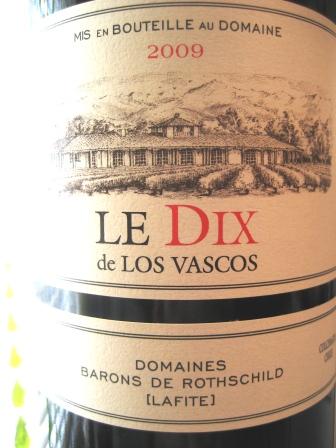
2009 Le Dix de Los Vascos cabernet sauvignon. The Rothschilds are making wine in Chile. (Someday, we really must learn more about the famed family.) If ever you encounter simply "Los Vascos" cabernet, do snap it up. It should retail for only about $10.


2010 Marques de Casa Concha chardonnay. I know people who won't drink Chilean wine because "it gives them a headache." Just Chilean wine. I ask you.


Below, beginning with Mormoreto, we resume our notice of "global reds."  This one is Italian.


The next, Argentinian. In my handmade signs in the aisle, I also cleverly underlined the 'm' in malbec to match the 'M' in Mendoza. Do you think people will notice?


2008 Raimat tempranillo. Spanish. 
"What?" my friend said. 
"You know," I started to explain. "Spanish. From Spain." 
"I KNOW," he said.


2009 Mazzoni Toscana rosso, Italian. Note that, as with Raimat, the vintage date of some three or four years back indicates that the wine has been aged a bit before release. In Mazzoni's case, you will pay a bit for the quality: It retails for about $20. 


Pinot noirs don't quite fit in to the "global red" category, because their acidity and slight gamy or earthy flavors are the opposite of the global red's dark, fruity lushness and almost sugary texture. But we include one, below, because sometimes they do come close. Parker Station retails for about $10.


Remember, also, our category of wines that are Perfectly Fine? Here are two more, both Italian. If you come across them, chances are your friendly retailer is trying to "blow them out" for about $5 each. He got a deal.

Villa San Zeno chardonnay and, next, Toscana (sangiovese and syrah blend). Perfectly fine.


Let's finish with something sparkling, shall we? Domaine Chandon Etoile rosé.  French winemakers come to Napa valley, set up shop circa 1983, and end up producing lovely things.


Escape hatch

Pardon a repeat of Feb. 2019, won't you? Warning! I've recently found out Blogger might be about to go the way of the dinosaurs. Sp...